Dick, B. F. (2018). That was Entertainment The Golden Age of the MGM Musical. Jackson, MS: University Press of Mississippi.
Eames, J. D. (1975). The MGM Story The Complete History of Fifty Roaring Years. NY: Crown Publishers INC. New York.
Dick, B. F. (2018). That was Entertainment The Golden Age of the MGM Musical. Jackson, MS: University Press of Mississippi.
Eames, J. D. (1975). The MGM Story The Complete History of Fifty Roaring Years. NY: Crown Publishers INC. New York.
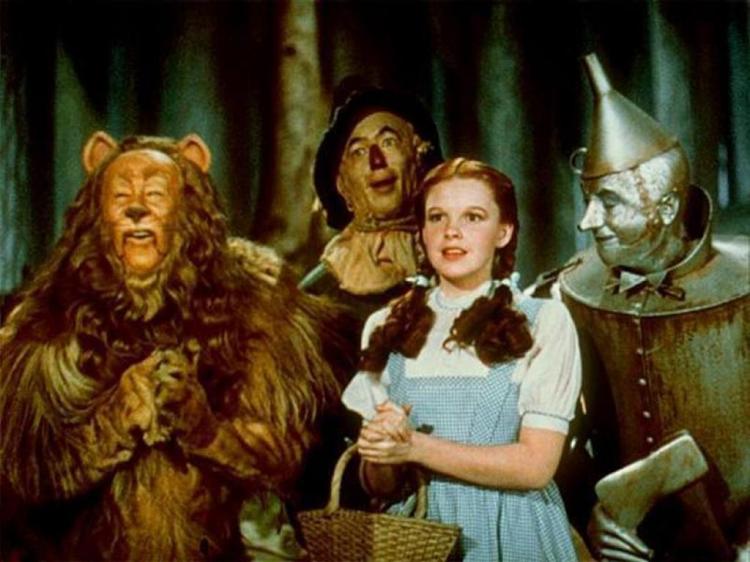
The Wizard of Oz is a film directed by Victor Fleming about a girl named Dorothy played by the very well known Judy Garland who is from Kansas and it is hit by a tornado in her hometown and is taken along with her dog, Toto to a magical place called Oz. All Dorothy wanted to do was go home but, she needed to see the Wizard of Oz in order to do that. Along the way Dorothy makes some friends. First Dorothy meets the Scarecrow who just wants a brain. Then she meets the Tin man who longs for a heart. Last but not least she meets the Cowardly Lion who so badly wants courage. It wasn’t an easy journey they were attacked by trees and flying monkeys but they eventually made it to Oz only to realize this powerful Wizard was a joke and was just a regular human. You don’t even have to have seen this film to know things like the iconic lines like “follow the yellow brick road” or “I’m melting!” and the most popular one “there’s no place like home.” As a kid I knew the song Somewhere Over the Rainbow without seeing the film and then years later I found out it was from the Wizard of Oz. I think everyone has had some kind of exposure to this film even if they don’t even know it. I know something that was really incredible to see in film was a movie go from black and white to color. I think another reason why this film is so appealing to many is because it doesn’t matter what age you are you can still enjoy the film. There are many adults who grew up watching this film and still enjoy it to this day. And there are kids who have seen for the first time ever and love it. I also think there are themes in the film that can apply to any age group. Like having a goal and wanting to fulfill that. All the characters had goals in mind and things that they wanted to achieve. Everyone has goals no matter how old you are. I can imagine that there were many kids who watched this film and felt very encouraged to follow their dreams no matter what dream it was. The film also showcased the reality of hardships in wanting to pursue your dreams. In real life it mostly likely won’t come in the form of Trees throwing apples at you or attacks from flying monkeys but, it comes in a lot of other ways. Pursuing any goal isn’t going to be this easy ride it would be nice if it was but, that just isn’t reality. There’s also disappointment and sometimes a lot of it just like the film. When Dorothy and her friends finally made it to Oz to see the wizard they realize he wasn’t a powerful wizard he was just a regular with no powers. Even though Dorothy and friends didn’t get what they wanted they way the expected that they were going to get it which was supposed through the wizard their difficult journey helped them get what they wanted. The Lion learned courage and was given a medal. The Tin man learned to love and got a watch in the shape of a heart. And the Scarecrow realized he had a brain all along and was rewarded with a Diploma. As for Dorothy she had the power to go home the whole time she just didn’t know it was in her shoes. In reality the goals that people have in life aren’t going to be handed to them on a silver platter without any effort. People need to work hard and sometimes face hardships to achieve those goals. I think The Wizard of Oz packed that message beautifully in a film for all ages to enjoy.
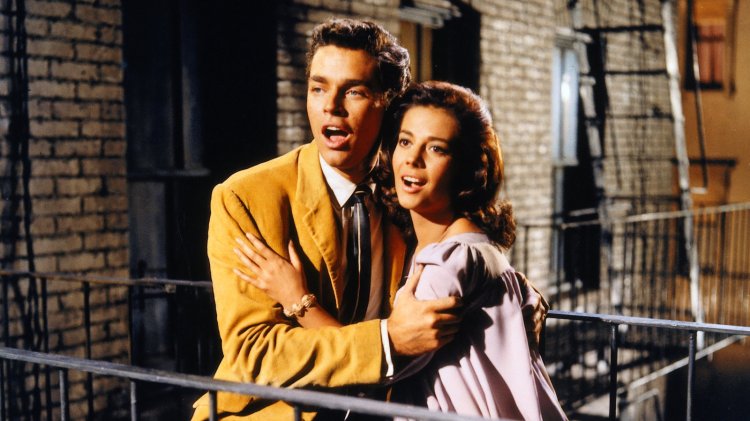
West Side Story is a musical based off the famous love story and tragedy of Romeo and Juliet. But instead the star crossed lovers are Tony and Maria. Tony is from an american gang called the Jets and Maria is the younger sister of the leader of the Puerto Rican gang the Sharks. The Jets and the Sharks have been having an ongoing rival for who knows how long. Both the Jets and the Sharks commonly like to hang out a spot called the turf but, they don’t think that it’s big enough for both gang’s to hang out at. They come up with a plan to fight for control of the turf. The fight unfortunately escalates and there happens to be some deaths in the process. I think this film was very revolutionary because it talked about things like gang violence and racial prejudice as well as had an interracial couple even though the actress who played Maria, Natalie Wood was not actually Puerto Rican. The choreography in this film was amazing as well as the music which was my favorite part. I think the music being composed so well is why this musical was also very popular. Some of my personal favorites are Maria, Tonight, and Somewhere. I especially love the scene for Somewhere which was written by Stephen Sondheim and Leonard Bernstein. Stephen Sondheim is very popular in the composing world I know him personally from the Broadway production then film Into the Woods. For the piece Somewhere as saddening as it is it is still a beautiful scene. Both Tony and Maria are singing on the couch and behind Tony is blue light most likely symbolizing the Jets and behind Maria is red light which most likely symbolizes the Sharks. The song just showed how much hope that Tony and Maria had for their future together. Some of the lyrics are “There’s a place for us somewhere a place for us peace and quiet and open air wait for us somewhere” (Sondheim and Bernstein 1961). Tony and Maria are yearning for a time when they are finally away from home where they won’t have to deal with the constant arguing from the Jets and the Sharks where they are around each other all the time in peace and quiet. Throughout this song Tony and Maria truly believe that they are going to spend the rest of their lives together but, they unfortunately don’t know that that isn’t going to be the case. Another in the song that stands out to me is “We’ll find a way of forgiving somewhere” (Sondheim and Bernstein 1961). I remember after Tony dies Maria was so angry with everyone she took Chino’s gun and pointed it at both the Jets and the Sharks and what Maria said to them was so powerful. She told them you all killed Tony and my brother and Riff but not with weapons like guns and bullets, but with your hate and kill too because now I’m full of hate. It kind of makes me think that the lyric in the song about forgiving is ironic because Maria is so filled with hate I think the last thing that she is thinking about is forgiving people at the moment. Back when Tony and Maria were singing Somewhere in the house. I noticed at one point Maria had red light but also a lot blue light beside her and Tony had blue light but also a lot of red light beside him. I think that could symbolize a lot of things like how Maria and Tony are both the same and the Sharks and the Jets are the same. I think they used the red lighting for the Sharks because Sharks are usually known for being out for blood. Bernardo, the leader of the Sharks was the first person to kill anyone and then Tony killed. They both wanted to protect their loved ones but they chose to do that by shedding blood and it was to their demise. The Jets and the Sharks didn’t want to put aside their differences and see that they are the same that they’re both people they let things like their race being different get in the way of that. I think that speaks to a lot of people there are still so many arguments about race to this day. And I think that is why West Side Story was so successful because it tackled real issues and issues that were hard.
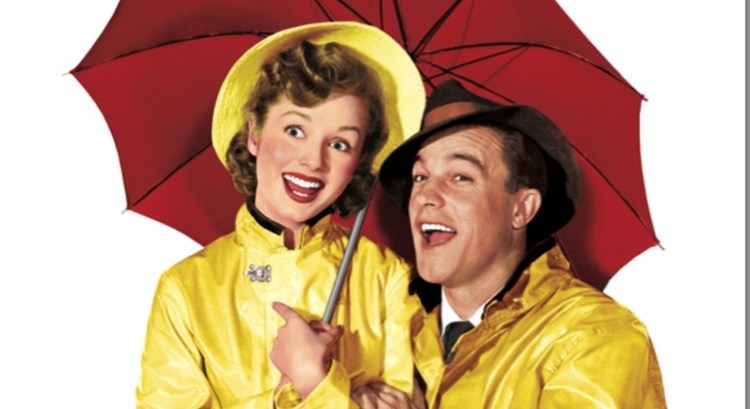
Singin’ in the Rain is a musical film about the end of silent films and the rise of talking films also known as talkies. Main character, Don Lockwood played by Gene Kelly is in an onscreen relationship with Lina Lamont played by Jean Hagen. Even though offscreen Don is in no way interested in Lina she believes their relationship onscreen is as real as can be when they’re offscreen. Ever since the talking film The Jazz Singer gains wild success Don’s boss, R.F. Simpson decides that they need to start making talking films as well to gain attention. There’s only one problem Lina has the most annoying voice on the planet and she can’t sing. Don’s best friend Cosmo Brown played by Donald O’Connor knows a chorus girl with a beautiful voice, Kathy Selden played by Debbie Reynolds. She agrees to dub for Lina but without Lina’s permission. When Lina eventually finds out what’s happening behind the scenes she’s furious and wants no credit given to Kathy. Singin’ in the Rain is one of the best musicals that was ever made with iconic musical numbers like “Good Mornin’ ” and “Singin’ in the Rain”. According to That Was Entertainment The Golden Age of the MGM Musical by Bernard F. Dick “Singin’ in the Rain is also a model of integration with the musical numbers advancing the plot as dialogue does in a play” (Dick 2018). That has had so much influence on so many musicals. Nowadays almost if not all musicals use musical numbers to advance the plot. Everything from the plot, the costumes, musical numbers, the actors and actresses was amazing in this film. The scene with Cosmo Brown when he performs “Make em’ laugh” was incredible. Seeing all this talent balled up in this one actor. His energy was insane and he got the recognition he deserved and won a Golden Globe for Best Actor. The shocking thing is that the film itself didn’t really win many awards. According to the source mentioned above “The real mood spoiler occurred when the Academy of Motion Picture Arts and Sciences announced its 1952 nominations. Singin’ in the Rain was ignored in the top categories (picture, director, actor, actress, screenplay) and only received nominations for supporting actress (Jean Hagen) and scoring. One of the most-honored films of all time won no Oscars” (Dick 2018). It’s crazy how groundbreaking of a film this was and it didn’t win many awards especially any Oscars nor was it really nominated for many things. It makes sense why Jean Hagen was nominated for supporting actress I had no idea that she wasn’t using her real voice when I was watching it for the first time. She also played the femme fatal role very well. The personality of Linda got under my skin. Debbie Reynolds did outstanding as well in this film. She apparently didn’t have any dancing experience before starring in movies for hollywood and she danced besides two professionals and held her own for sure (Dick 2018). I can’t get over how well the choreography in this film is. The actors were so in sync with each other it was so fun and amazing to watch. They made it look so effortlessly especially Donald O’Connor and Gene Kelly. Whenever those two danced together it was a real treat. Singin’ in the Rain is one of the best if not the best musicals of all time all the memorable and catchy tunes as well as the plot and the performances from the actors gives everyone something to enjoy. Singin’ in the Rain will forever be an iconic film that families and anyone can watch and enjoy, which is why I think it’s such a successful film anyone can enjoy it and I think many will continue to enjoy it for years to come.
Since Hollywood films started to get very popular in the west they wanted to make more films to suit the huge audience that they were attracting. A group of men specifically, Marcus Loew, Adolph Zukor, and William Fox came together to make nickelodeons which were 5 cent films shown in shops. Since that was also the beginning of film people were really intrigued by the moving pictures. At first the film was only one reel then it eventually was two reels and they progressed from there. More and more people began to get interested in these films and demand went way up. There was even more demand than there was supply. Because of this “moviemakers began to ask higher terms from the exhibitors through their wholesalers, the exchanges” (Eames 1975). Eventually the major exhibitors were determined to become their own suppliers. Zukor, who was the leader of this movement eventually cut ties with Marcus Loew’s theaters in 1912 and made what is now known as Paramount but what was formally known as Famous Players company. Loew was a very good customer of Zukor but Zukor started “charging a percentage of theatre takings for his bigger pictures, instead of the customary fixed rental. At the same time he kept buying theatres and enlarging his network of exchanges to form an integrated manufacture-distribution-retail organization” (Eames 1975). Because of what Zukor was doing Loew wanted to do the same. Loew was eventually given the opportunity to have Metro Pictures which was made in 1915. Loew had a lot of success with Metro Pictures specifically with the film The Four Horsemen of the Apocalypse but unfortunately they lost the star of that film, Rudolph Valentino to Paramount due to him not getting the raise he wanted in his salary which was an increase of $100. But even with that loss they were still able to produce successful hits that equally just a good because they still had the same director, Rex Ingram a successful film he is known for is The Prisoner of Zenda and Scaramouche (Eames 1975). Loew continued to help Metro gain success by signing a well known child actor at the time which was Jackie Coogan. Loew even made a deal with the former Metro officer and who is and independent producer Louis B. Mayer to make four films a year. All this work eventually became very tiresome for Loew luckily Loew’s right hand man Nicholas Schenck who has been with him since they were working on nickelodeons was able to help him out and lead more. Eventually Lee Shubert came into the picture and he was very interested in merging with Goldwyn pictures. Goldwyn had a lot of well known directors and actors working for them. Goldwyn also had a beautiful studio the only problem was poor management. The management became so poor because Samuel Goldwyn left in 1922 due to being replaced by Godsol. Loew was very excited about the idea of merging with Goldwyn. Then came a lawyer named J. Robert Rubin who has been helping represent Loew along with Metro pictures and Mayer. Rubin advised that Mayer discussed with Loew. During Mayer’s first five years in Hollywood was doing very well and had good actors working for him. The amount of good actors he had didn’t compare to Goldwyn or Metro. But, Mayer was very strong in what Goldwyn and Metro lacked, good management and that was due to help from Harry Rapf and Irving Thalberg. Thalberg was a very important piece when it came to the merging of these production companies. After Loew spoke with Nicholas Schenck a deal was made (Eames 1975). “Loew’s Incorporated was to absorb Goldwyn Pictures and Louis B. Mayer Productions, and the resulting Metro-Goldwyn Pictures would control production and distribution as a subsidiary of Loew’s. Contracts were signed with Mayer as studio chief, Thalberg as supervisor of production and Rubin as secretary. All three were to be vice-presidents; the first two at the former Goldwyn studio, Rubin as their New York contact at Loew’s headquarters” (Eames 1975).

 The MGM Film Phenomenon